6-K
UNITED STATES
SECURITIES AND EXCHANGE COMMISSION
Washington, D.C. 20549
FORM 6-K
REPORT OF FOREIGN ISSUER
PURSUANT TO RULE 13a-16 OR 15d-16
OF THE SECURITIES EXCHANGE ACT OF 1934
For the Month of May 2026
(Commission File No. 001-41636)
Oculis Holding AG
(Translation of registrant's name into English)
Bahnhofstrasse 20
CH-6300
Zug, Switzerland
(Address of registrant’s principal executive office)
Indicate by check mark whether the registrant files or will file annual reports under cover of Form 20-F or Form 40-F.
INFORMATION CONTAINED IN THIS REPORT ON FORM 6-K
On May 29, 2026, Oculis Holding AG (the “Registrant”) announced topline data from its DIAMOND Phase 3 trials of OCS-01 for the treatment of diabetic macular edema and held a conference call to discuss the results. The press release and the corporate presentation presented during the conference call are furnished hereto as Exhibits 99.1 and 99.2, respectively.
Exhibits 99.1 and 99.2 are hereby incorporated by reference into the Registrant’s Registration Statements on Form S-8 (File No. 333-271938 and 333-287806) and Form F-3 (File Nos. 333-294011, 333-278409, 333-271063 and 333-291426).
EXHIBIT INDEX
SIGNATURES
Pursuant to the requirements of the Securities Exchange Act of 1934, the registrant has duly caused this report to be signed on its behalf by the undersigned, thereunto duly authorized.
|
|
|
|
|
|
|
|
|
|
|
OCULIS HOLDING AG |
|
|
|
|
Date: May 29, 2026 |
|
|
|
By: |
|
/s/ Sylvia Cheung |
|
|
|
|
|
|
Sylvia Cheung Chief Financial Officer |
EX-99.1
Exhibit 99.1

Oculis Announces Topline Results from DIAMOND Phase 3 Trials with OCS-01 in Diabetic Macular Edema
•The primary endpoint of mean change in best corrected visual acuity (BCVA) from baseline to week 52 in both Phase 3 trials was not met
•The secondary endpoint of retinal thickness showed a substantial and persistent reduction with OCS-01 vs vehicle in both trials
•Oculis will focus its developmental efforts and financial resources on the ongoing Privosegtor PIONEER registrational program in optic neuropathies and the Licaminlimab PREDICT-1 registrational trial in dry eye disease
•Financial position remains strong with $278 million in cash, cash equivalents, and short-term investments as of March 31, 2026, providing cash runway into 2H 2029
Conference call today at 4:30 pm ET
ZUG, Switzerland, 29 May, 2026 – Oculis Holding AG (Nasdaq: OCS / XICE: OCS) (Oculis), a global biopharmaceutical company focused on breakthrough innovations to address significant unmet medical needs in neuro-ophthalmology and ophthalmology, today announced topline results from its Phase 3 DIAMOND-1 and DIAMOND-2 trials of OCS-01 eye drops in patients with diabetic macular edema (DME).
The DIAMOND (DIAbetic Macular edema patients ON a Drop) program consisted of two Phase 3, double-masked, randomized, multi-center trials to evaluate the efficacy and safety of OCS-01 eye drops in patients with DME following 52 weeks of treatment. Over 800 patients were enrolled across both pivotal trials at 119 investigational sites throughout the United States and several other countries.
The primary endpoint, mean change in best corrected visual acuity early treatment diabetic retinopathy study (BCVA ETDRS) letter score at Week 52, was not met in both trials. The secondary endpoint of retinal thickness, as measured by OCT, showed a substantial and persistent reduction with OCS-01 vs vehicle at all visits in DIAMOND-2 and at all visits except Week 52 in DIAMOND-1. The key secondary endpoint of the proportion of patients with ≥15-letter gain in BCVA was not met in both trials.
OCS-01 was well tolerated, with no unexpected adverse events observed, and the overall safety profile was consistent with that of previous trials.
Based on the results, at this time, Oculis does not plan to pursue an FDA regulatory filing for OCS-01 in DME.
Riad Sherif, M.D., Chief Executive Officer of Oculis, said: “We are naturally disappointed that the substantial and sustained reduction in retinal thickness observed across both trials didn’t translate into BCVA improvement at week 52. In these two trials, our team partnered with 119 global sites across multiple countries and demonstrated excellent execution. We thank the patients, investigators, and all
Exhibit 99.1
clinical experts who participated in the DIAMOND program. Our strong financial position allows us to execute on our robust late-stage development portfolio. While we finalize the review of DIAMOND program data, we will strategically focus resources on advancing our late-stage portfolio, including the Privosegtor platform, starting with the PIONEER program for Privosegtor in optic neuropathies, and the PREDICT-1 trial for Licaminlimab to drive precision medicine in dry eye disease.”
Analyst and investor call
The Oculis management team will host an analyst and investor call today at 4:30 pm U.S. Eastern Time, to review the topline results and provide a pipeline update. Interested parties may participate in the call via the following webcast link:
https://viavid.webcasts.com/starthere.jsp?ei=1765661&tp_key=0d6c454cfe
Or use the following dial-in options:
US-based Investors: 1-877-407-4018
International Investors: 1-201-689-8471
Conference ID: 13760937
A replay of the webcast and accompanying slides will be available for 90 days following the event through the “Events and Presentations” page of the “Investors and Media” section of the company’s website.
- ENDS -
About Oculis
Oculis is a global biopharmaceutical company (Nasdaq: OCS; XICE: OCS) focused on breakthrough innovations to address significant unmet medical needs in neuro-ophthalmology and ophthalmology. Oculis’ highly differentiated late-stage clinical pipeline focuses on two core product candidates. Privosegtor is a breakthrough neuroprotective candidate in the PIONEER program, which consists of studies intended to support registration plans for treatment of optic neuropathies, including optic neuritis (ON) and non-arteritic anterior ischemic optic neuropathy (NAION). Privosegtor also has potential to be developed for additional indications in other neuro-ophthalmic and neurological diseases. Licaminlimab is a novel, topical anti-TNFα in a registrational trial, and is being developed with a genotype-based approach for treating patients with dry eye disease (DED). Headquartered in Switzerland with operations in the U.S., Iceland and Switzerland, Oculis is led by an experienced management team with a successful track record and supported by leading international healthcare investors.
For more information, please visit: www.oculis.com
Oculis Contact
Ms. Sylvia Cheung, CFO
sylvia.cheung@oculis.com
Exhibit 99.1
Investor Relations
LifeSci Advisors
Corey Davis, Ph.D.
cdavis@lifesciadvisors.com
Media Relations
ICR Healthcare
Amber Fennell
oculis@icrhealthcare.com
Cautionary Statement Regarding Forward Looking Statements
This press release contains forward-looking statements and information. For example, statements regarding the potential benefits of the Company’s product candidates, the initiation, timing, progress and results of current and future clinical trials, Oculis’ research and development programs, regulatory and business strategy; Oculis’ future development plans; the timing or likelihood of regulatory filings and approvals; and Oculis’ cash runway are forward-looking. The clinical trial results presented in this press release are topline and preliminary and subject to change, as analysis is ongoing. All forward-looking statements are based on estimates and assumptions that, while considered reasonable by Oculis and its management, are inherently uncertain and are inherently subject to risks, variability, and contingencies, many of which are beyond Oculis’ control. These forward-looking statements are provided for illustrative purposes only and are not intended to serve as, and must not be relied on by an investor as, a guarantee, assurance, prediction or definitive statement of a fact or probability. Actual events and circumstances are difficult or impossible to predict and will differ from assumptions. All forward-looking statements are subject to risks, uncertainties and other factors that may cause actual results to differ materially from those that we expected and/or those expressed or implied by such forward-looking statements. Forward-looking statements are subject to numerous conditions, many of which are beyond the control of Oculis, including those set forth in the Risk Factors section of Oculis’ annual report on Form 20-F and any other documents filed with the SEC. Copies of these documents are available on the SEC’s website, www.sec.gov. Oculis undertakes no obligation to update these statements for revisions or changes after the date of this release, except as required by law.
OCS-01�Phase 3 DIAMOND Trials�Topline Results in DME May 29, 2026
These slides and the accompanying oral presentation contain forward-looking statements and information. The use of words such as “may,” “might,” “will,” “should,” “expect,” “plan,” “anticipate,” “believe,” “estimate,” “project,” “intend,” “future,” “potential,” or “continue,” and other similar expressions are intended to identify forward-looking statements. For example, all statements we make regarding our regulatory and development plans for OCS-01 in diabetic macular edema or other indications, the timing, progress and regulatory strategy for our other research and development programs, our cash runway and statements about the potential therapeutic effects of our product candidates are forward-looking. All forward-looking statements are based on estimates and assumptions by our management that, although we believe to be reasonable, are inherently uncertain. The clinical trial results presented in this presentation are topline and preliminary and subject to change, as analysis is ongoing. All forward-looking statements are subject to risks and uncertainties that may cause actual results to differ materially from those that we expected. Factors that may cause actual results to differ materially from current expectations include, but are not limited to: the possibility that Oculis may be adversely affected by economic, business, and/or competitive factors; Oculis' estimates of expenses and profitability; Oculis' ability to develop, manufacture and commercialize the product candidates in its pipeline; actions of regulatory authorities, which may affect the initiation, timing and progress of clinical studies or future regulatory approvals or marketing authorizations; the ability of Oculis or its partners to enroll and retain patients in clinical studies; the ability of Oculis or its partners to gain approval from regulators for planned clinical studies, study plans or sites; Oculis' ability to obtain and maintain regulatory approval or authorizations of its products, including the timing or likelihood of expansion into additional markets or geographies; the success of Oculis' current and future collaborations, joint ventures, partnerships or licensing arrangements; financial position, strategy and anticipated milestones; and other risks and uncertainties set forth in the sections entitled “Risk Factors” and “Cautionary Note Regarding Forward-Looking Statements” in documents that Oculis may from time to time file or furnish with the SEC. Any forward-looking statement speaks only as of the date on which it was made. We undertake no obligation to update or revise any forward-looking statement, whether as a result of new information, future events or otherwise, except as required by law. Cautionary note on forward-looking statements Copyright of this presentation is owned by Oculis. No part of this presentation may be reproduced in any manner without the permission of Oculis. Safe Harbor Statements
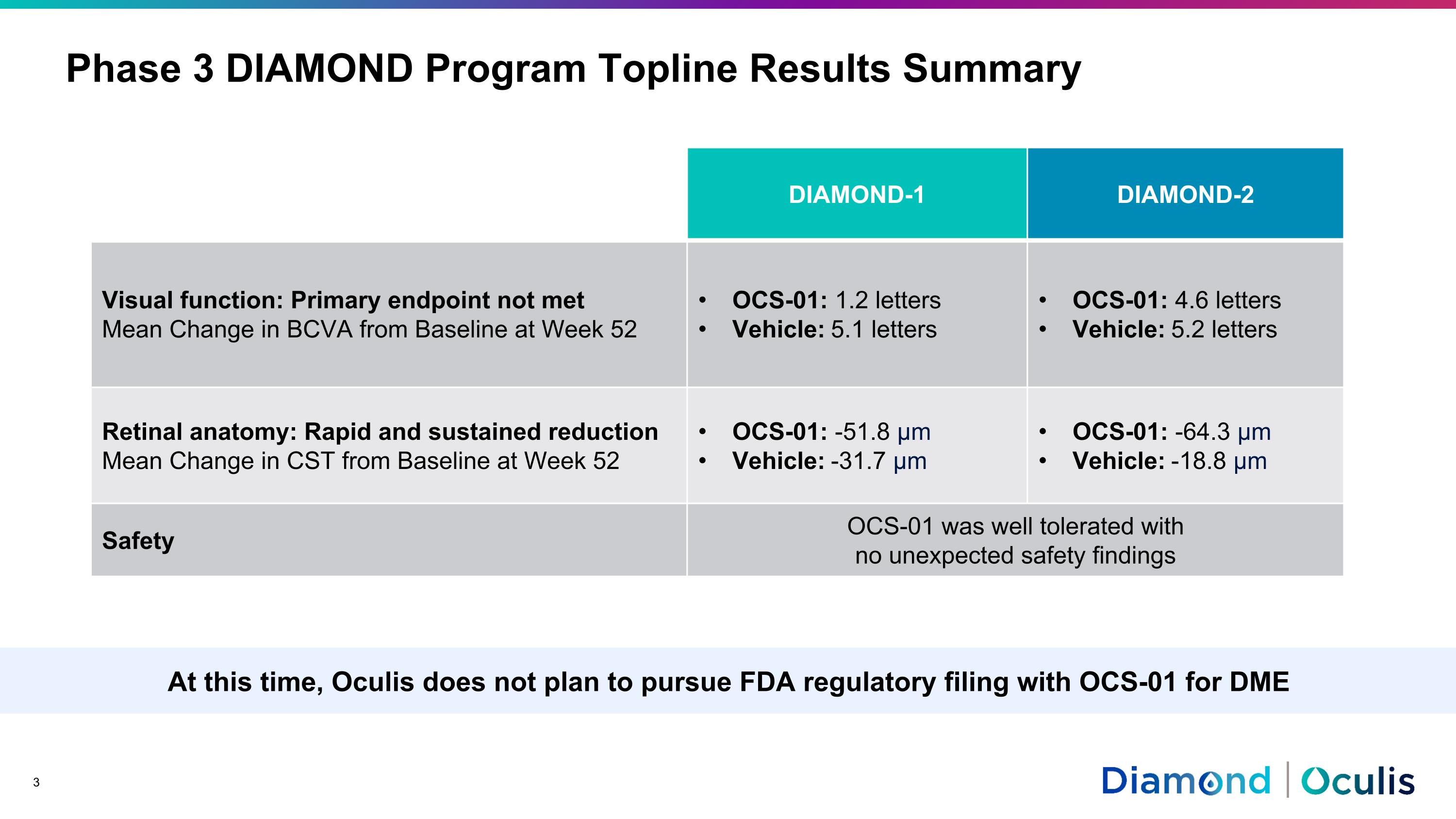
Phase 3 DIAMOND Program Topline Results Summary At this time, Oculis does not plan to pursue FDA regulatory filing with OCS-01 for DME DIAMOND-1 DIAMOND-2 Visual function: Primary endpoint not met Mean Change in BCVA from Baseline at Week 52 OCS-01: 1.2 letters Vehicle: 5.1 letters OCS-01: 4.6 letters Vehicle: 5.2 letters Retinal anatomy: Rapid and sustained reduction Mean Change in CST from Baseline at Week 52 OCS-01: -51.8 µm Vehicle: -31.7 µm OCS-01: -64.3 µm Vehicle: -18.8 µm Safety OCS-01 was well tolerated with no unexpected safety findings
Study Design �and Patient Population
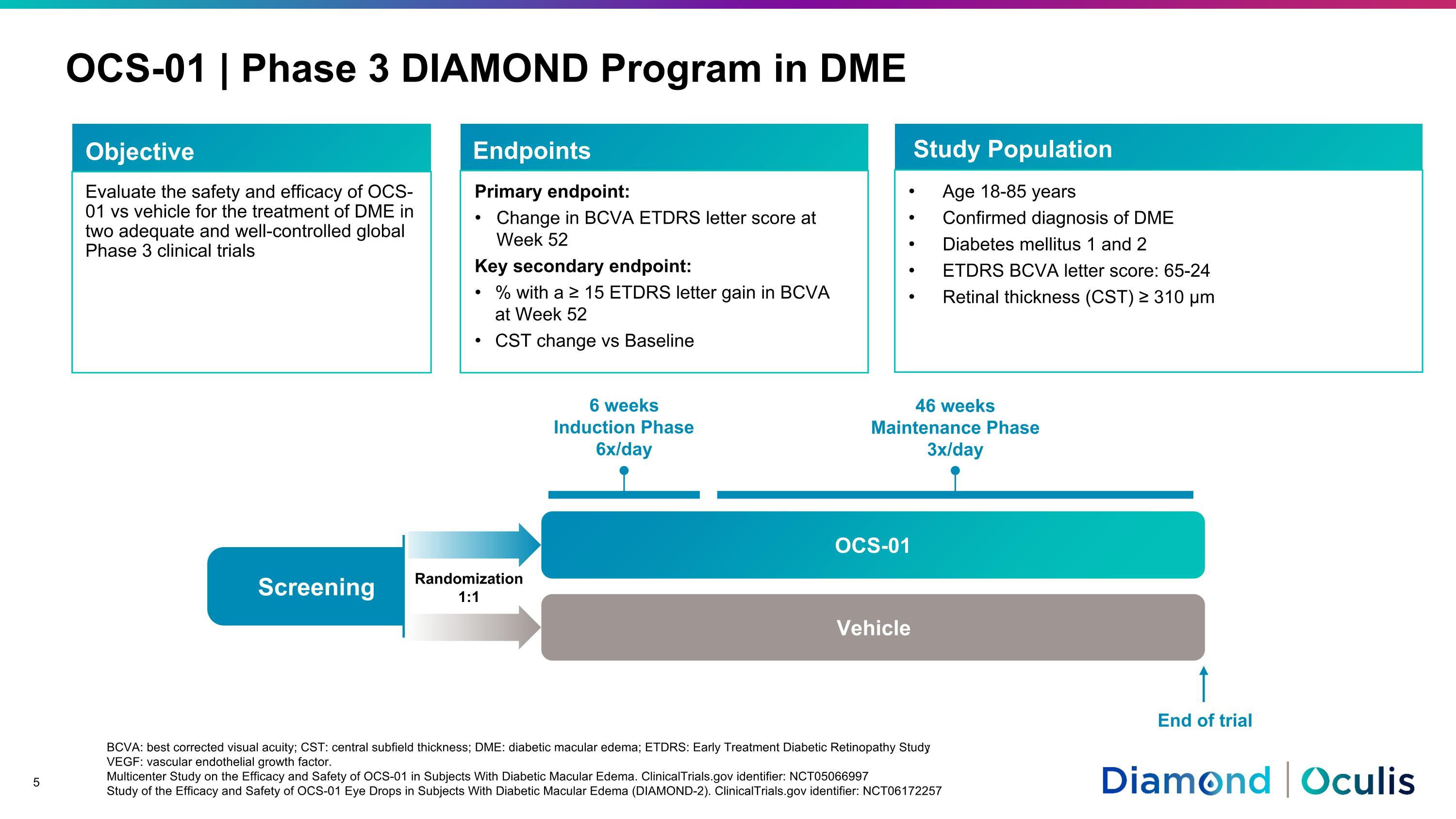
OCS-01 | Phase 3 DIAMOND Program in DME BCVA: best corrected visual acuity; CST: central subfield thickness; DME: diabetic macular edema; ETDRS: Early Treatment Diabetic Retinopathy Study; �VEGF: vascular endothelial growth factor. Multicenter Study on the Efficacy and Safety of OCS-01 in Subjects With Diabetic Macular Edema. ClinicalTrials.gov identifier: NCT05066997 Study of the Efficacy and Safety of OCS-01 Eye Drops in Subjects With Diabetic Macular Edema (DIAMOND-2). ClinicalTrials.gov identifier: NCT06172257 Evaluate the safety and efficacy of OCS-01 vs vehicle for the treatment of DME in two adequate and well-controlled global Phase 3 clinical trials Age 18-85 years Confirmed diagnosis of DME Diabetes mellitus 1 and 2 ETDRS BCVA letter score: 65-24 Retinal thickness (CST) ≥ 310 µm Primary endpoint: Change in BCVA ETDRS letter score at Week 52 Key secondary endpoint: % with a ≥ 15 ETDRS letter gain in BCVA at Week 52 CST change vs Baseline Objective Endpoints Study Population Screening OCS-01 Vehicle End of trial Randomization 1:1 46 weeks Maintenance Phase 3x/day 6 weeks Induction Phase 6x/day
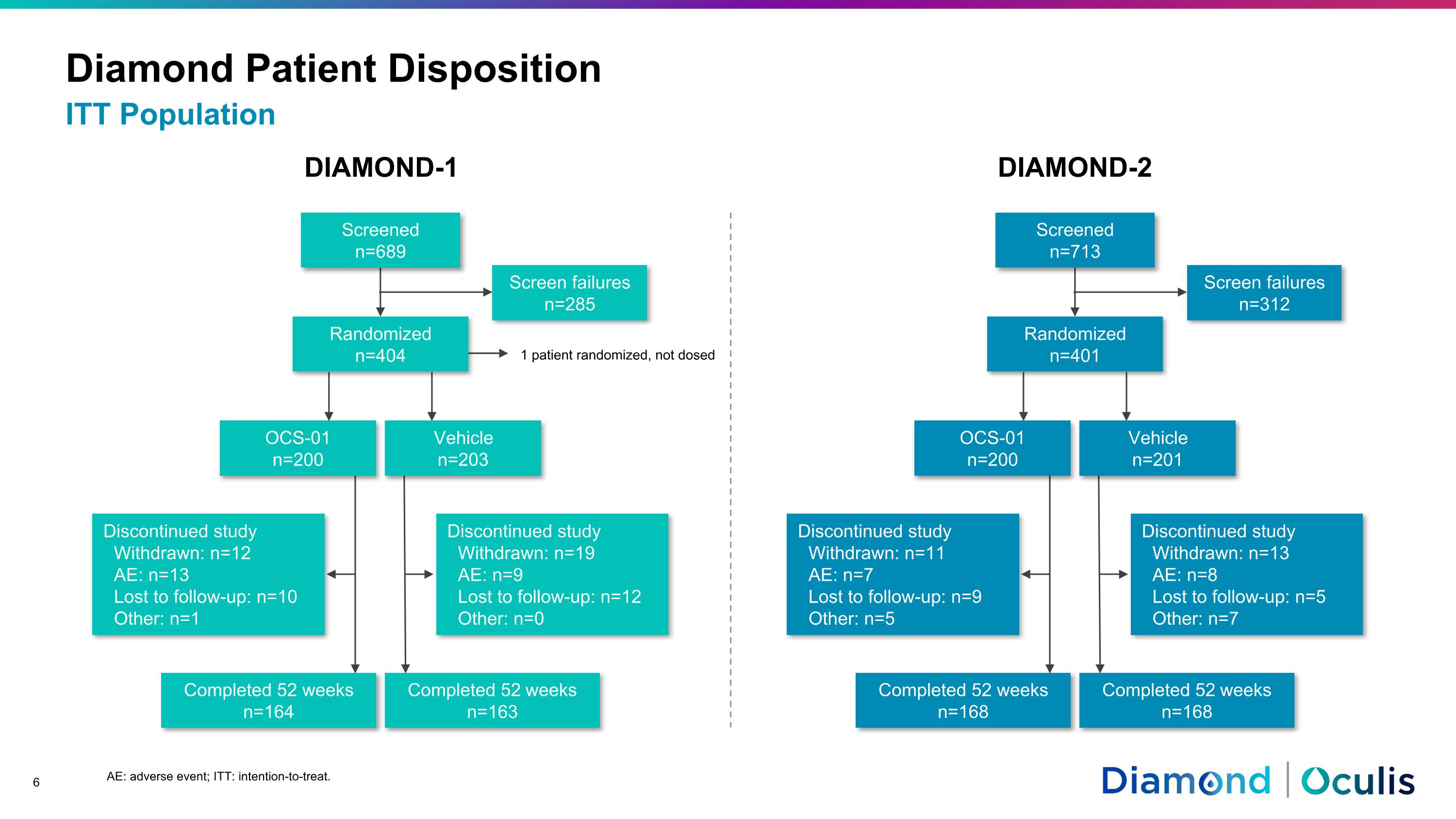
ITT Population Diamond Patient Disposition AE: adverse event; ITT: intention-to-treat. DIAMOND-1 DIAMOND-2 Screen failures n=285 OCS-01 n=200 Vehicle n=203 Completed 52 weeks n=164 Completed 52 weeks n=163 Discontinued study Withdrawn: n=19 AE: n=9 Lost to follow-up: n=12 Other: n=0 Discontinued study Withdrawn: n=12 AE: n=13 Lost to follow-up: n=10 Other: n=1 Randomized n=404 Screened �n=689 Screen failures n=312 OCS-01 n=200 Vehicle n=201 Completed 52 weeks n=168 Completed 52 weeks n=168 Discontinued study Withdrawn: n=13 AE: n=8 Lost to follow-up: n=5 Other: n=7 Discontinued study Withdrawn: n=11 AE: n=7 Lost to follow-up: n=9 Other: n=5 Randomized n=401 Screened �n=713 1 patient randomized, not dosed
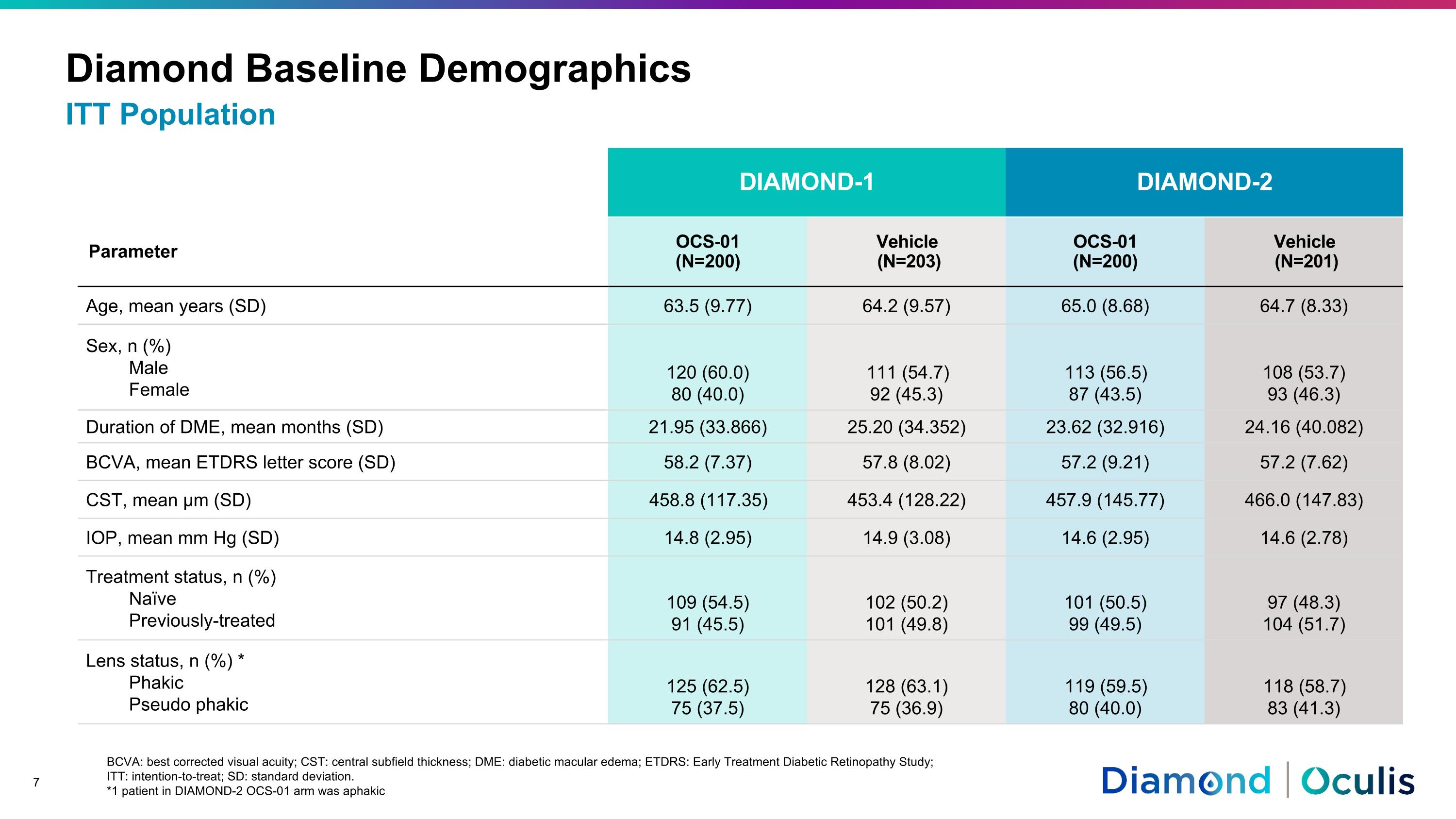
DIAMOND-1 DIAMOND-2 Parameter OCS-01 (N=200) Vehicle (N=203) OCS-01 (N=200) Vehicle (N=201) Age, mean years (SD) 63.5 (9.77) 64.2 (9.57) 65.0 (8.68) 64.7 (8.33) Sex, n (%) Male Female 120 (60.0)�80 (40.0) 111 (54.7)�92 (45.3) 113 (56.5)�87 (43.5) 108 (53.7)�93 (46.3) Duration of DME, mean months (SD) 21.95 (33.866) 25.20 (34.352) 23.62 (32.916) 24.16 (40.082) BCVA, mean ETDRS letter score (SD) 58.2 (7.37) 57.8 (8.02) 57.2 (9.21) 57.2 (7.62) CST, mean µm (SD) 458.8 (117.35) 453.4 (128.22) 457.9 (145.77) 466.0 (147.83) IOP, mean mm Hg (SD) 14.8 (2.95) 14.9 (3.08) 14.6 (2.95) 14.6 (2.78) Treatment status, n (%) Naïve Previously-treated 109 (54.5)�91 (45.5) 102 (50.2)�101 (49.8) 101 (50.5)�99 (49.5) 97 (48.3)�104 (51.7) Lens status, n (%) * Phakic Pseudo phakic 125 (62.5)�75 (37.5) 128 (63.1)�75 (36.9) 119 (59.5)�80 (40.0) 118 (58.7)�83 (41.3) ITT Population Diamond Baseline Demographics BCVA: best corrected visual acuity; CST: central subfield thickness; DME: diabetic macular edema; ETDRS: Early Treatment Diabetic Retinopathy Study; �ITT: intention-to-treat; SD: standard deviation. *1 patient in DIAMOND-2 OCS-01 arm was aphakic
Efficacy
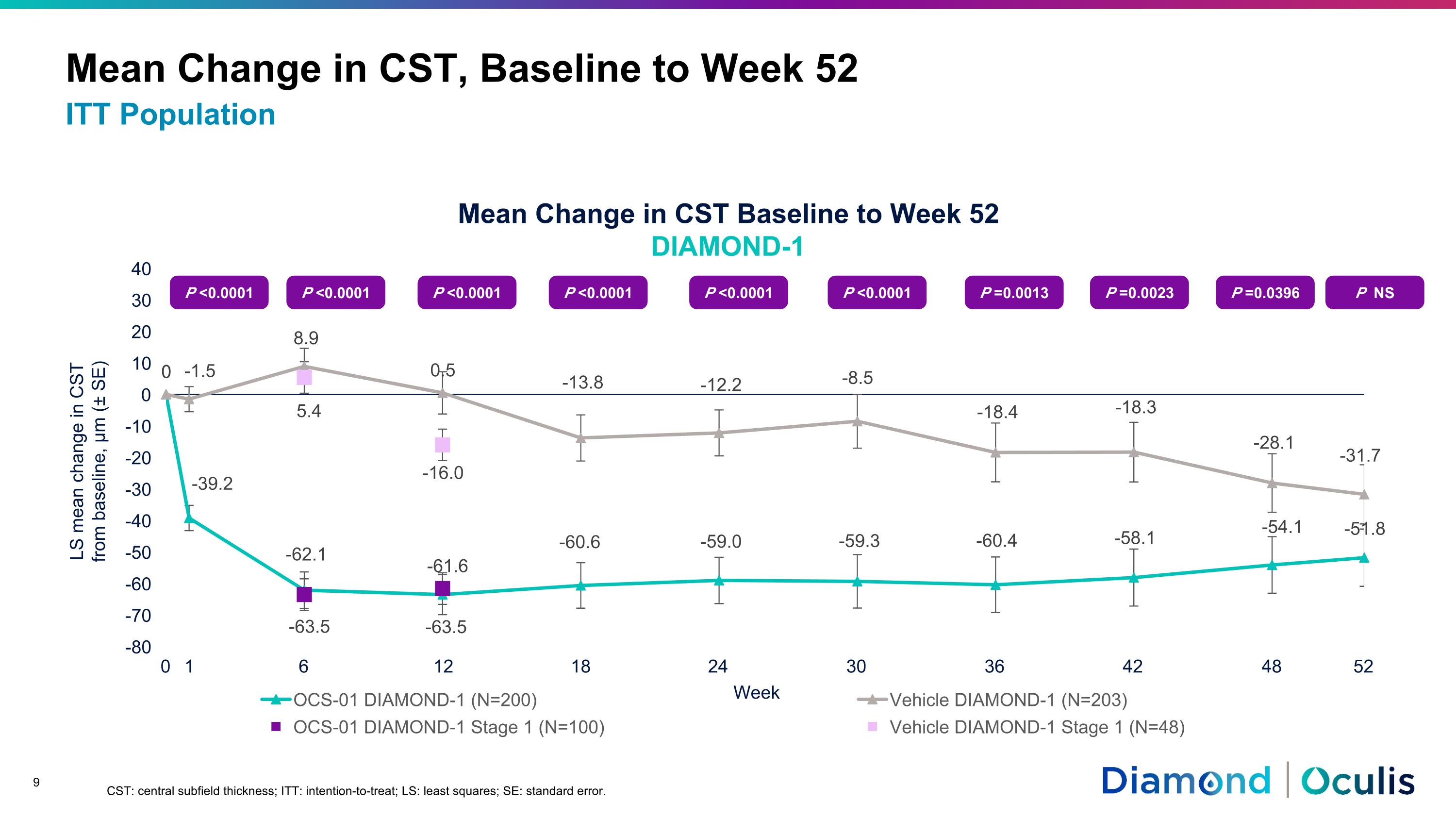
Mean Change in CST, Baseline to Week 52 CST: central subfield thickness; ITT: intention-to-treat; LS: least squares; SE: standard error. Mean Change in CST Baseline to Week 52 �DIAMOND-1 ITT Population 1 6 12 18 30 24 36 42 48 52 0 P <0.0001 P <0.0001 P <0.0001 P <0.0001 P <0.0001 P <0.0001 P =0.0013 P =0.0023 P =0.0396 P NS
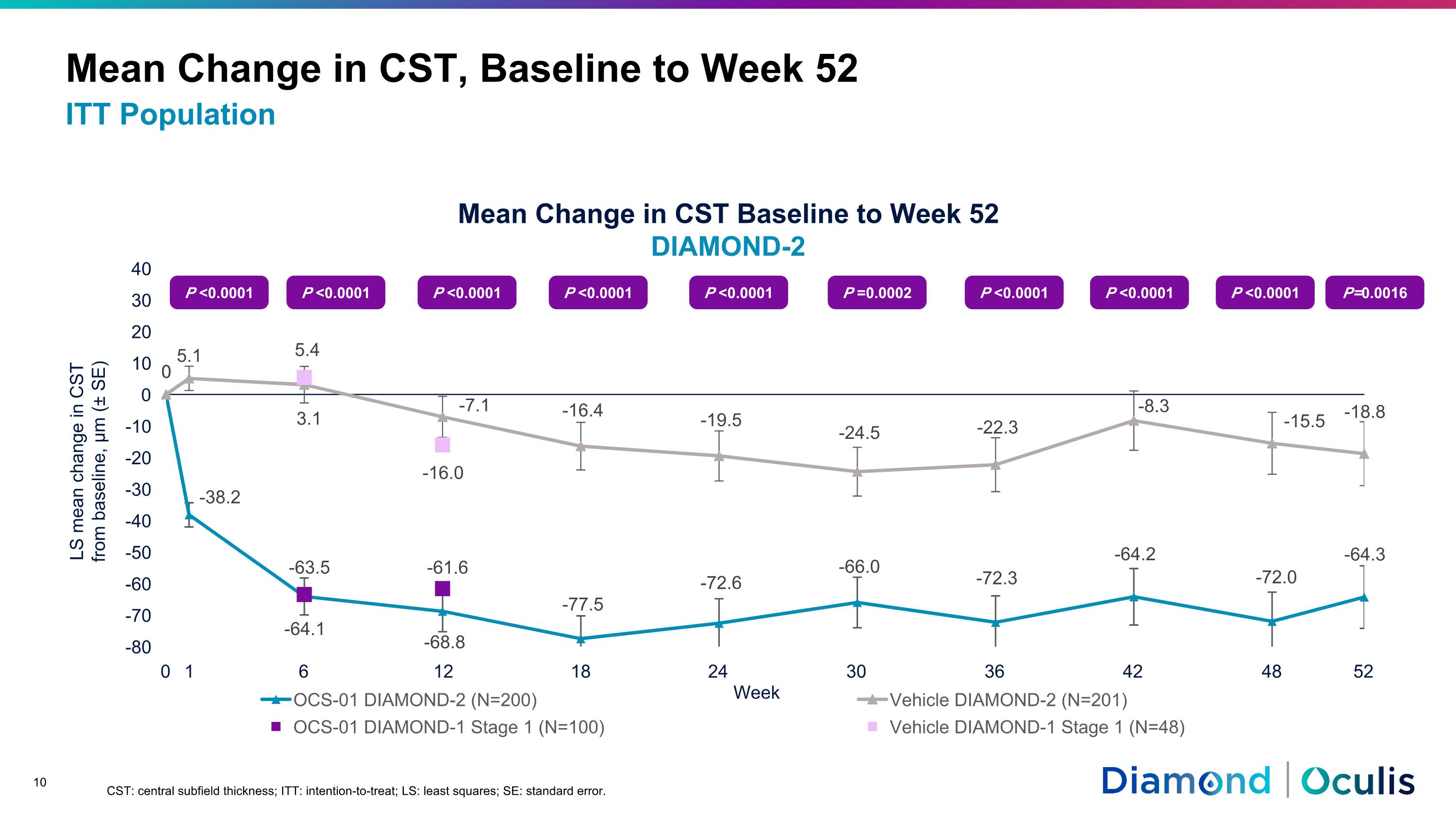
Mean Change in CST, Baseline to Week 52 CST: central subfield thickness; ITT: intention-to-treat; LS: least squares; SE: standard error. Mean Change in CST Baseline to Week 52 �DIAMOND-2 ITT Population 1 6 12 18 30 24 36 42 48 52 0 P <0.0001 P <0.0001 P <0.0001 P <0.0001 P <0.0001 P =0.0002 P <0.0001 P <0.0001 P <0.0001 P=0.0016
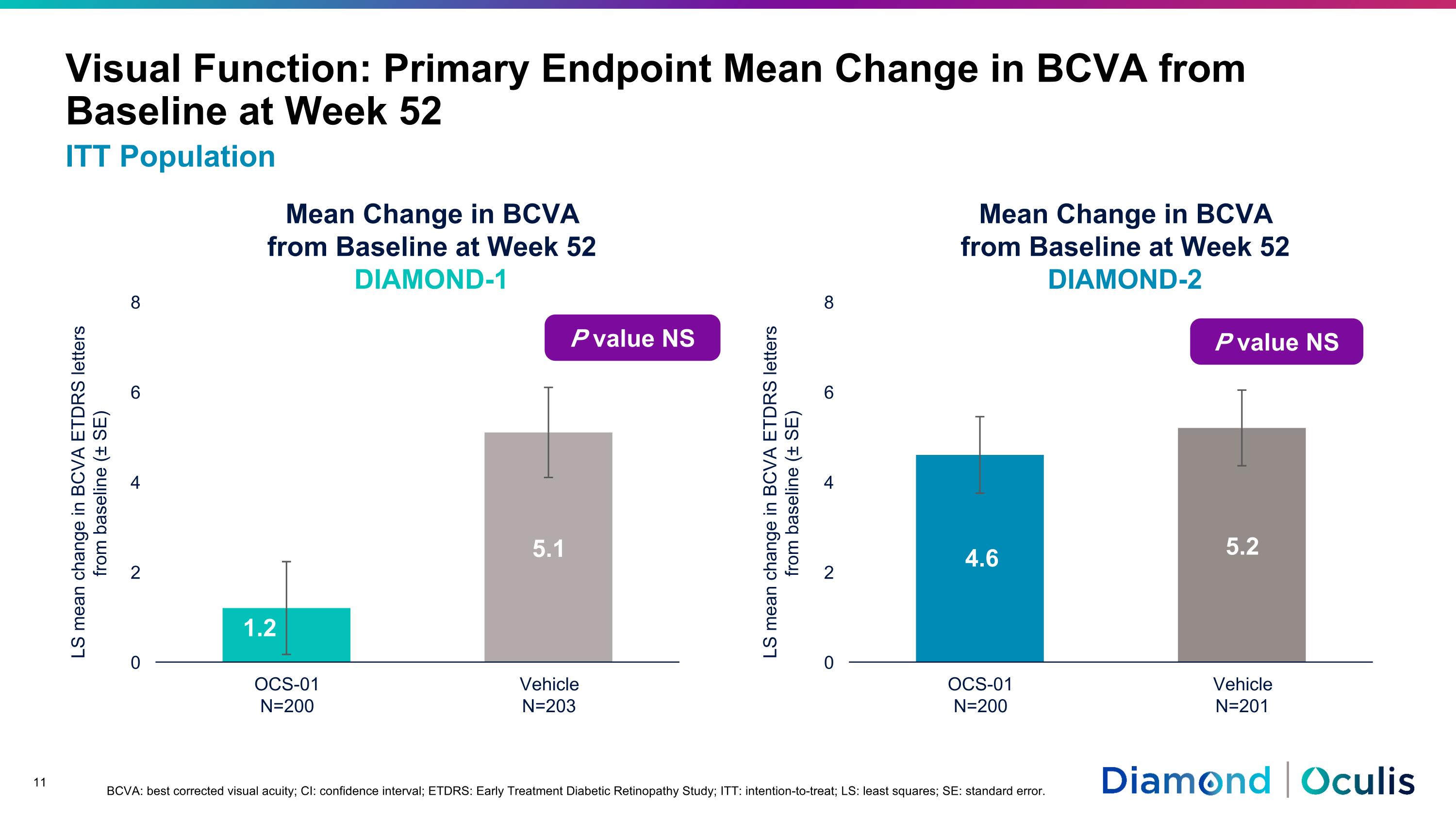
ITT Population BCVA: best corrected visual acuity; CI: confidence interval; ETDRS: Early Treatment Diabetic Retinopathy Study; ITT: intention-to-treat; LS: least squares; SE: standard error. Visual Function: Primary Endpoint Mean Change in BCVA from Baseline at Week 52 Mean Change in BCVA �from Baseline at Week 52 DIAMOND-1 Mean Change in BCVA �from Baseline at Week 52 DIAMOND-2 P value NS P value NS
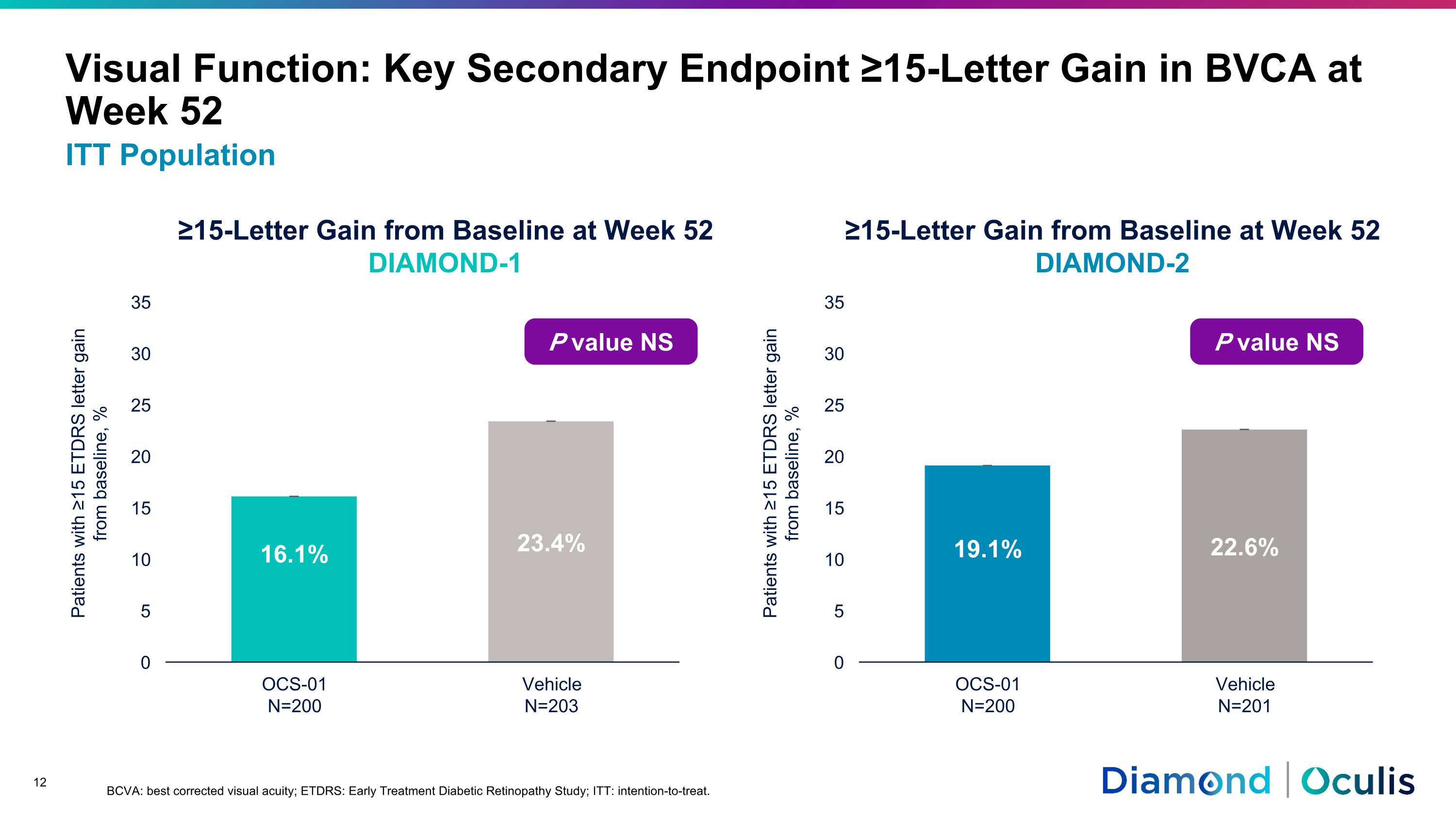
ITT Population BCVA: best corrected visual acuity; ETDRS: Early Treatment Diabetic Retinopathy Study; ITT: intention-to-treat. Visual Function: Key Secondary Endpoint ≥15-Letter Gain in BVCA at Week 52 ≥15-Letter Gain from Baseline at Week 52 DIAMOND-1 ≥15-Letter Gain from Baseline at Week 52 �DIAMOND-2 P value NS P value NS

Safety
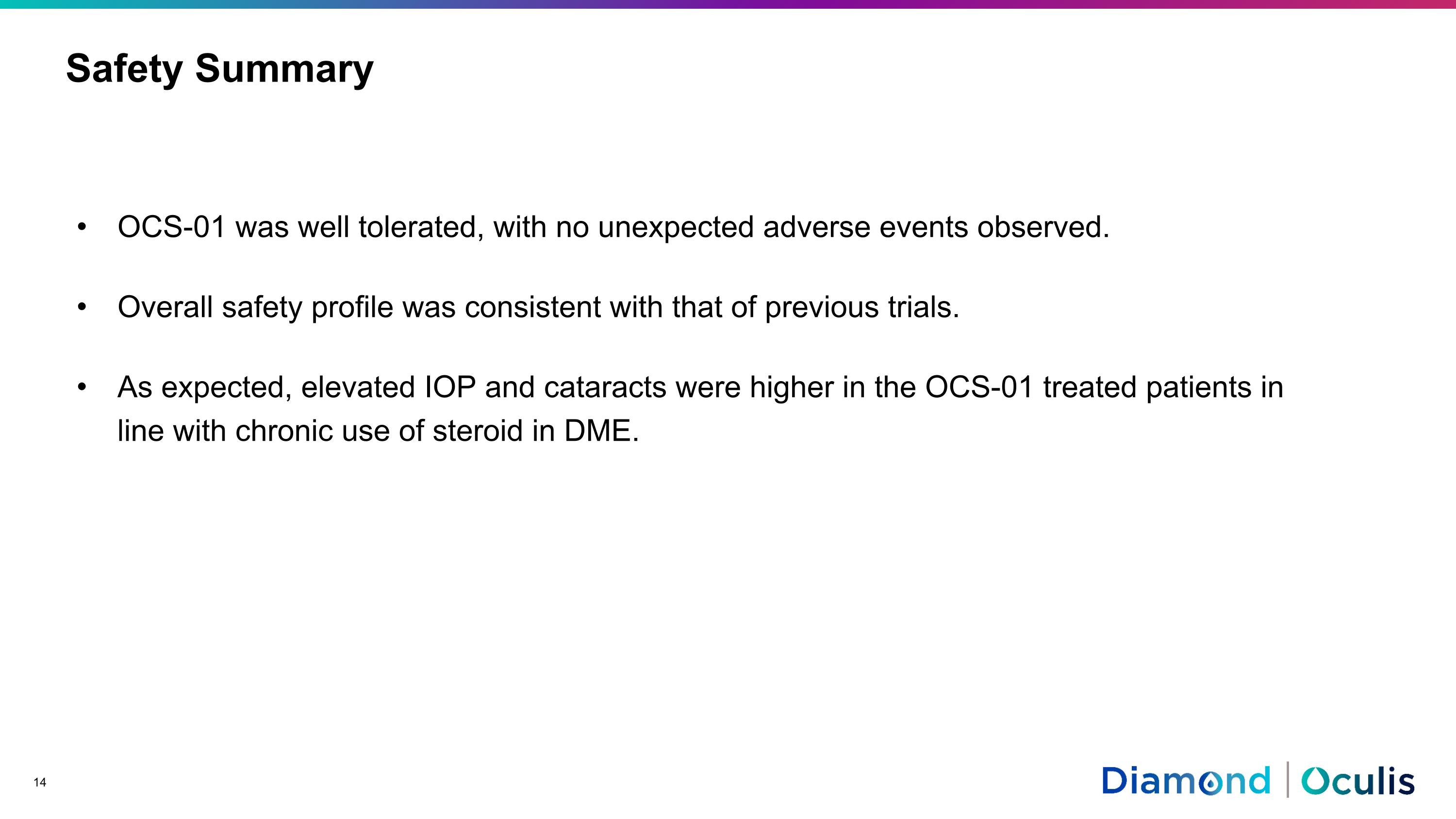
Safety Summary OCS-01 was well tolerated, with no unexpected adverse events observed. Overall safety profile was consistent with that of previous trials. As expected, elevated IOP and cataracts were higher in the OCS-01 treated patients in line with chronic use of steroid in DME.
Summary
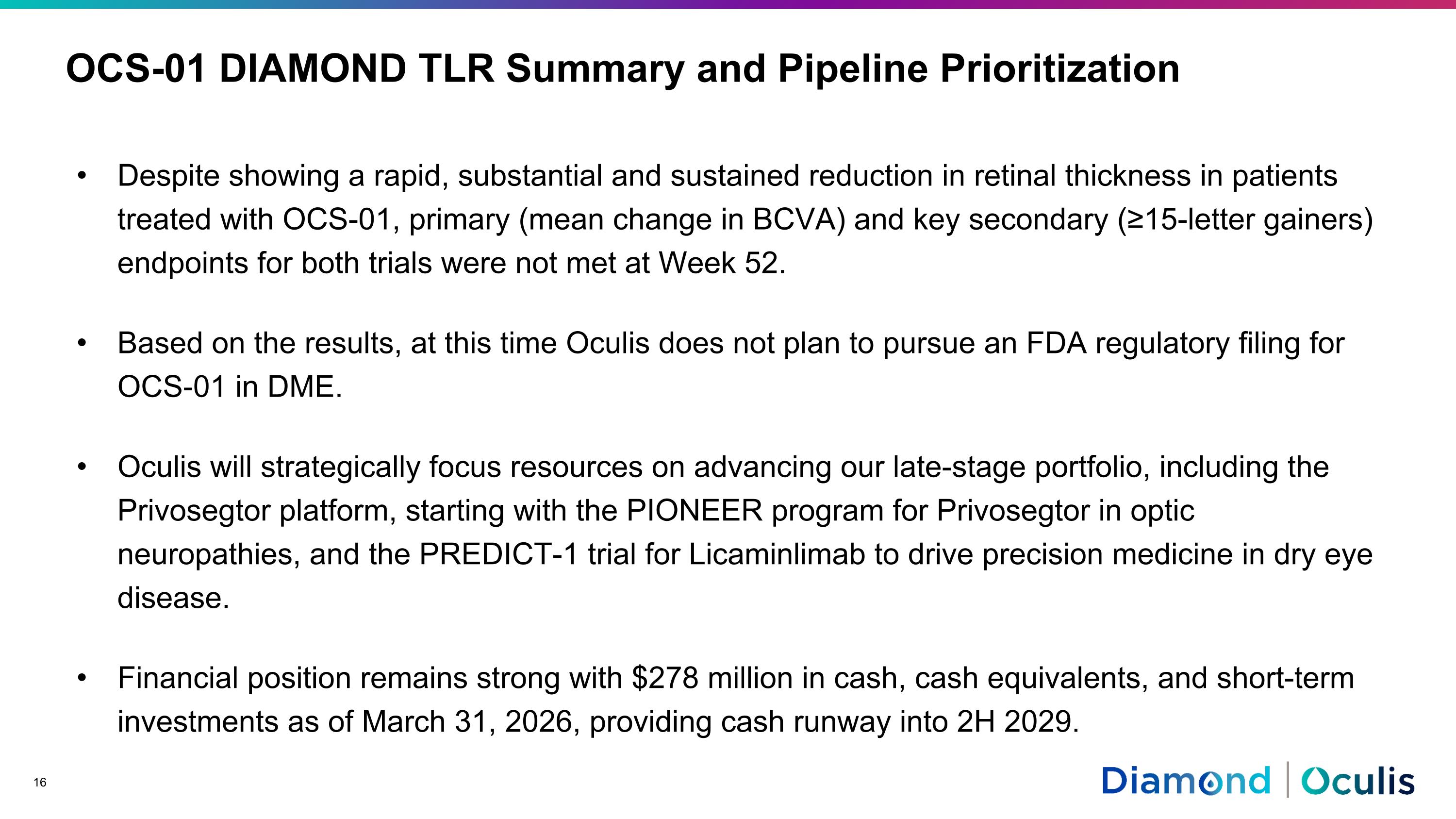
OCS-01 DIAMOND TLR Summary and Pipeline Prioritization Despite showing a rapid, substantial and sustained reduction in retinal thickness in patients treated with OCS-01, primary (mean change in BCVA) and key secondary (≥15-letter gainers) endpoints for both trials were not met at Week 52. Based on the results, at this time Oculis does not plan to pursue an FDA regulatory filing for OCS-01 in DME. Oculis will strategically focus resources on advancing our late-stage portfolio, including the Privosegtor platform, starting with the PIONEER program for Privosegtor in optic neuropathies, and the PREDICT-1 trial for Licaminlimab to drive precision medicine in dry eye disease. Financial position remains strong with $278 million in cash, cash equivalents, and short-term investments as of March 31, 2026, providing cash runway into 2H 2029.

Q&A